Eight that did
not work
Eight businesses between the ages of seven and twelve, before the one that worked. The question he asks about each of them is not whether it failed.
“Don't just ask, did it fail. Ask, what exactly failed.”
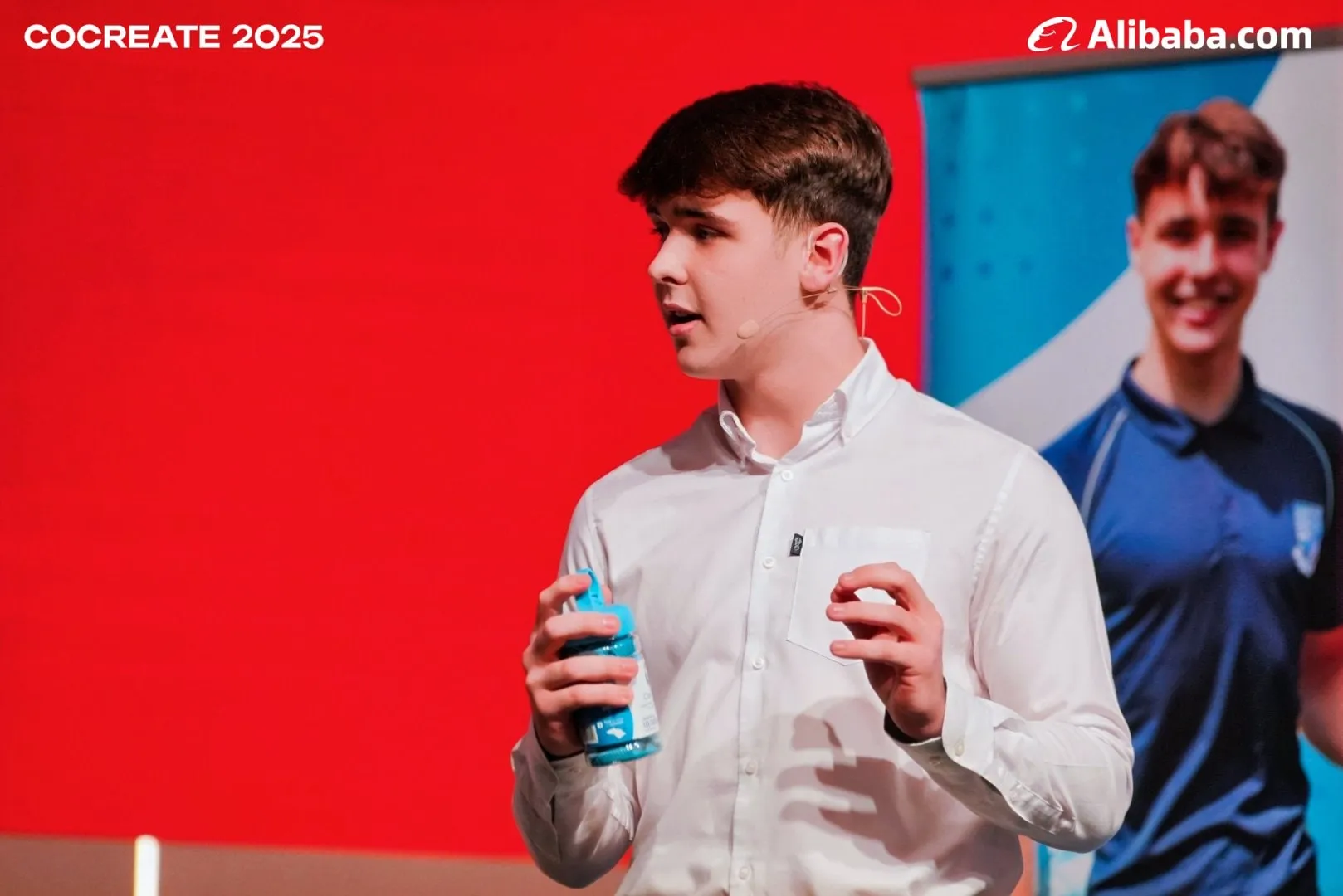
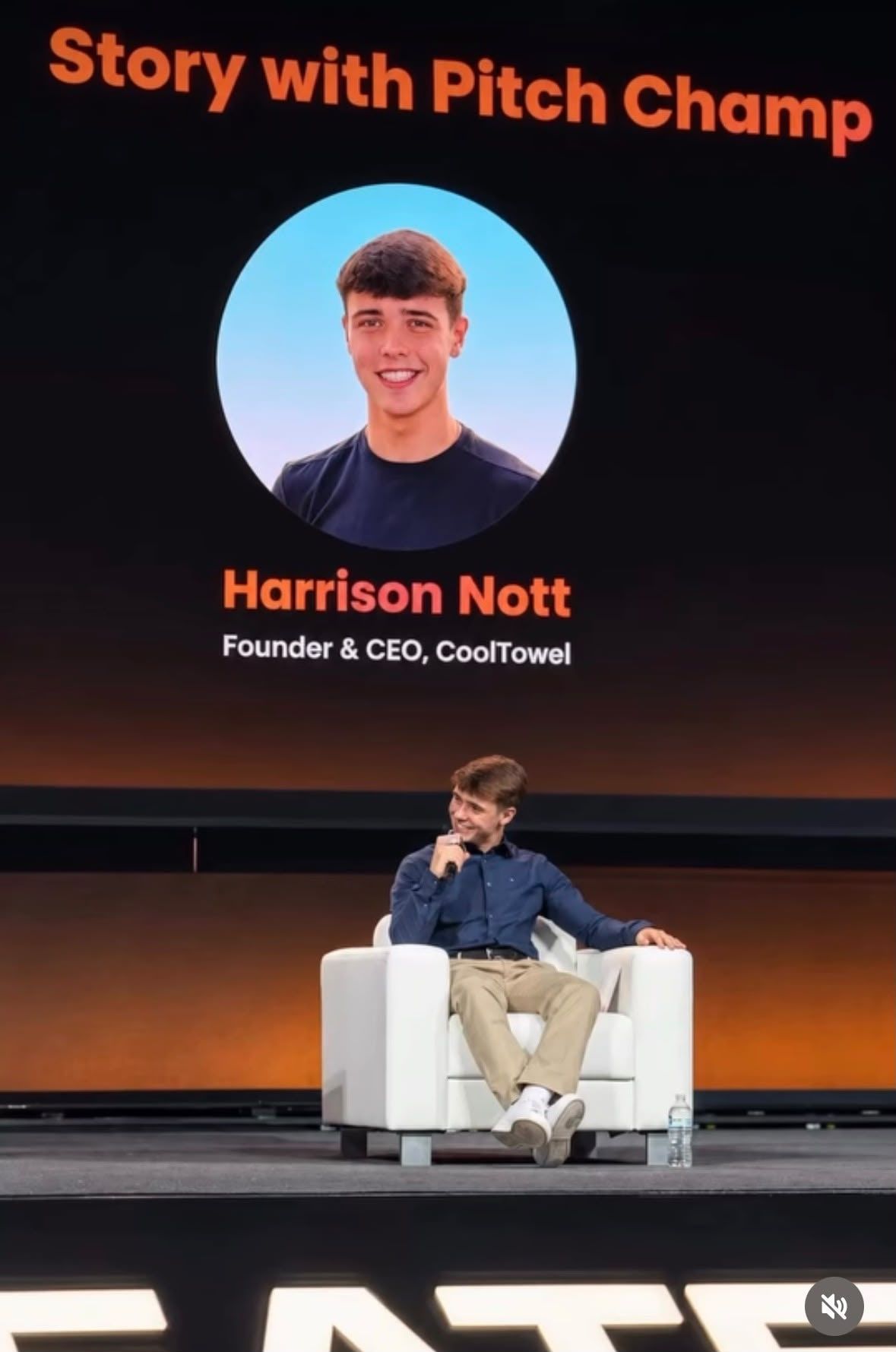
Harrison, on stage at CoCreate
-
eBay
His own toys and clothes, photographed and listed by him on his parents’ account. Whatever a sale made went straight back into the next thing to sell.
What exactly failed: Nothing did, which is why it is first. It never made much money and that was never the point: it taught him the whole of retail in miniature.
-
Hand sanitiser
The first one with his own name on it. Fifty empty bottles, a sheet of sticky labels, and a logo he drew himself.
What exactly failed: The branding. Family bought a few out of kindness and that did not cover the bottles. People buy things that look like somebody cared, and a sticky label is not that.
-
Dog treats
An attempt at something people would need again and again, which is a good instinct at ten. He tested recipes and posted them.
What exactly failed: The product. His own dog would not eat them. It did teach him the boring half of running anything: licensing, insurance, and the paperwork that decides whether you may sell a thing at all.
-
Dropshipping
Hundreds of products listed off the back of the eBay years. Around two thousand pounds turned over in three months, which sounds like the first real success here.
What exactly failed: Control. Somebody else made it, somebody else shipped it, and he carried the complaint. Long shipping and poor quality came back as returns, and he finished down. He tried again at twelve with money behind the ads, and made no sales at all.
-
The agency
Hours of YouTube on strategy, then running TikTok accounts for other people. One client’s post went viral.
What exactly failed: Nothing, except that none of it was his. That is the week an eleven year old worked out he could put something in front of millions of people for nothing. He had no product to point at it for two more years.
-
Car washing
Car washes were shut and everybody was at home with a dirty car. Flyers, a petrol pressure washer, a logo, a website, a friend on the payroll. Six months, three thousand pounds.
What exactly failed: Nothing, and he stopped it anyway. It did not scale and he did not enjoy it. He was a child washing cars in his free time.
-
A pallet of books
A whole pallet, bought to resell.
What exactly failed: All of it. Not one sold. On his own account this is still the one he calls embarrassing.
-
A TikTok Shop
Four months building a shop selling many different products at once.
What exactly failed: Four sales, because there was nothing about any of it that was his. That sentence is what the ninth business is a direct answer to.
Everything that happened afterwards ran on a realisation he had two years before he had anything to sell.
The ninth one: the towel
Summer 2023, losing a squash match in the heat and dripping with it, he went looking for a cooling towel that actually worked and could not find one.
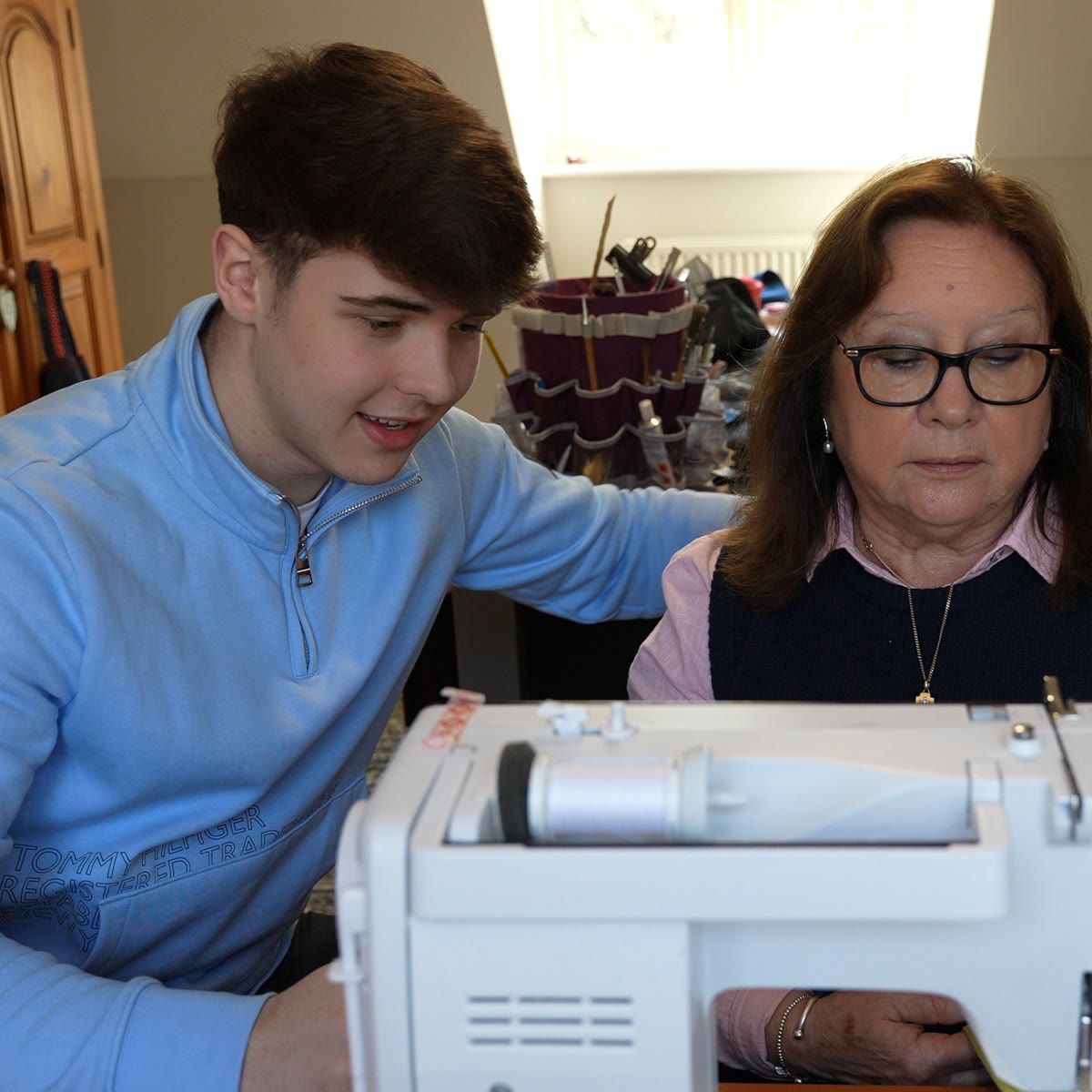
Six years of solving problems nobody had, and here was one he did have. His nan came round on a Wednesday after school with her sewing machine, and he wrote every step down on his phone as she went.
The first one was not good. It went crispy in the freezer and was awkward to use. But he took it on court and it worked, which was the whole point: proof the thing could exist.
Fifty units, and then nothing
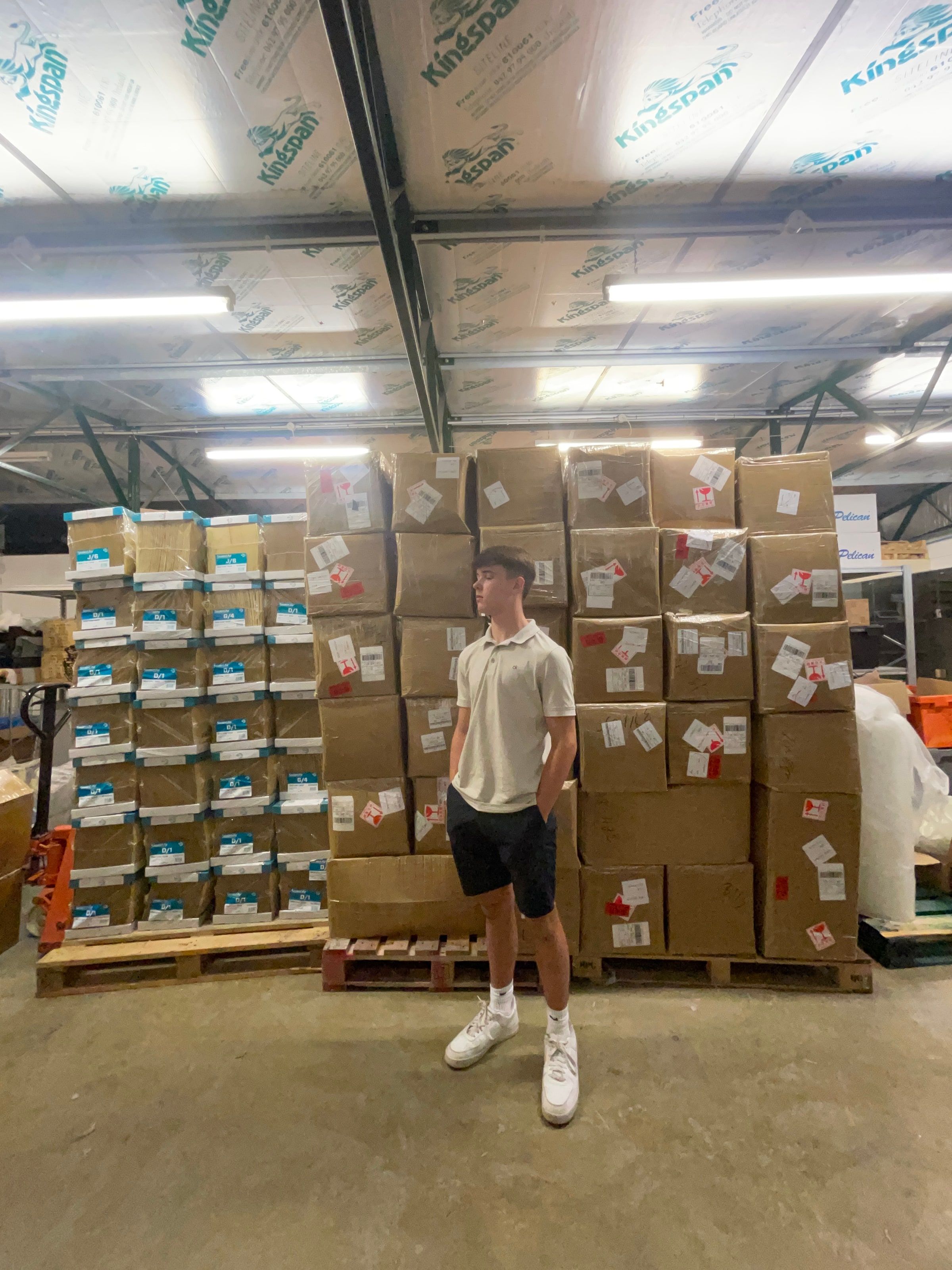
He knew Alibaba from the earlier businesses, and went through hundreds of materials and factories until he found a fabric that held cold rather than just water. Then the parts nobody counts: a logo, a website, photographs, a name. He ordered fifty units.
Then months of nothing at all.
Late in 2023 he posted one video on TikTok and sold a single towel. He checked twice, assuming a glitch. He went to bed and woke up sold out. His parents did not believe him.
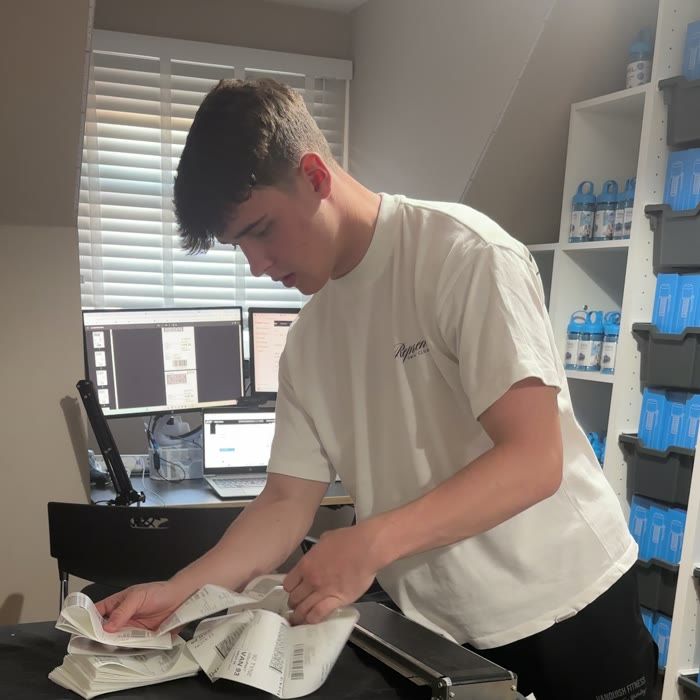
Then the part nobody posts. He and his dad packed and posted every order by hand on Royal Mail, untracked, and kept the receipts. A few days later TikTok Shop cancelled every single order, because he had not used one of their approved couriers.
He had proof of postage. Almost every buyer confirmed the parcel had arrived. He called, opened hundreds of support tickets, and went to London to try to find somebody to speak to in person.
He was not paid a penny. About £500, which was everything the business had. He restocked 300 units and bought a thermal label printer.
“I remember checking and literally thinking it was a mistake and not real. Most people would have stopped. I didn't.”
Harrison, in his own words
Out of a bedroom
The year opened badly. A cooling towel does not sell in a British winter, so he and his dad pivoted to filtered water bottles under a second brand and hired an Italian agency at over a thousand pounds a month to run the ads.
It did not work, and he was left holding stock he had to clear. He eventually sold that business outright, which taught him something he could not have learned any other way: how to sell a company.
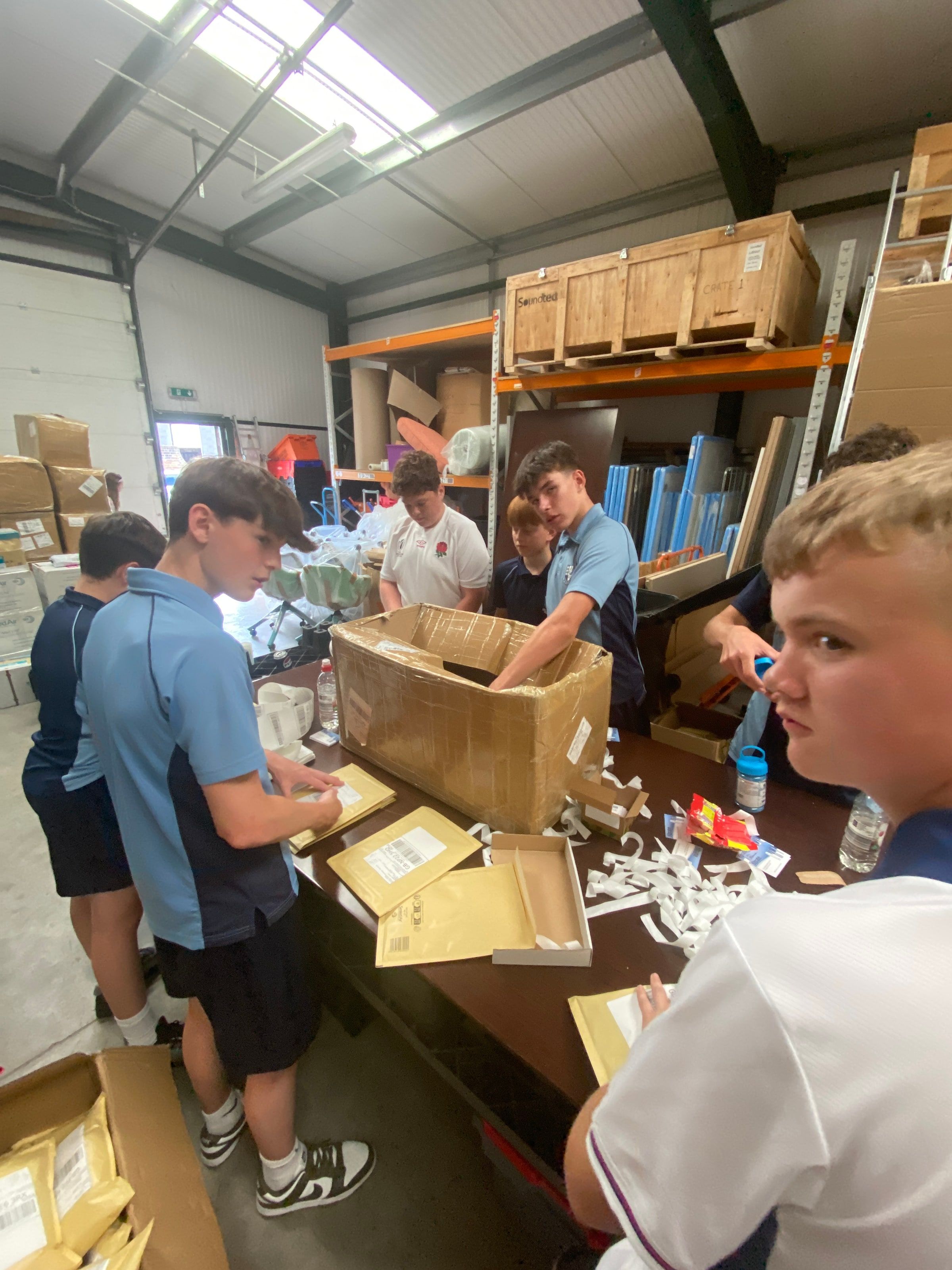
Then the weather turned and demand went somewhere he could not keep up with. He rented more of his dad's warehouse, and he hired his school friends and paid them properly.
It took over an hour just to print the labels and another five to pack, with music on and pizza in. The video he made of that day did close to a million views on its own.
Fifty thousand pounds of revenue over six months, which is not fifty thousand of profit once product, ads, fees and tax come out. The same week he was in two national newspapers he was packing orders on his bedroom floor on his own.
The day he lost three thousand pounds at school
He had four thousand pounds of ads running that had been profitable all week, so he left them on and went to school. They stopped working somewhere around second period. By the time he got home he was three thousand pounds down, most of the month's profit.
It is on this page for the same reason he tells it on stage: the version of this story where a fourteen year old checks his phone between lessons and everything is fine is not the story.
The O2
His bedroom stopped being a bedroom. Pallets came in, boxes went out, and there were days of two thousand orders and twenty thousand pounds.
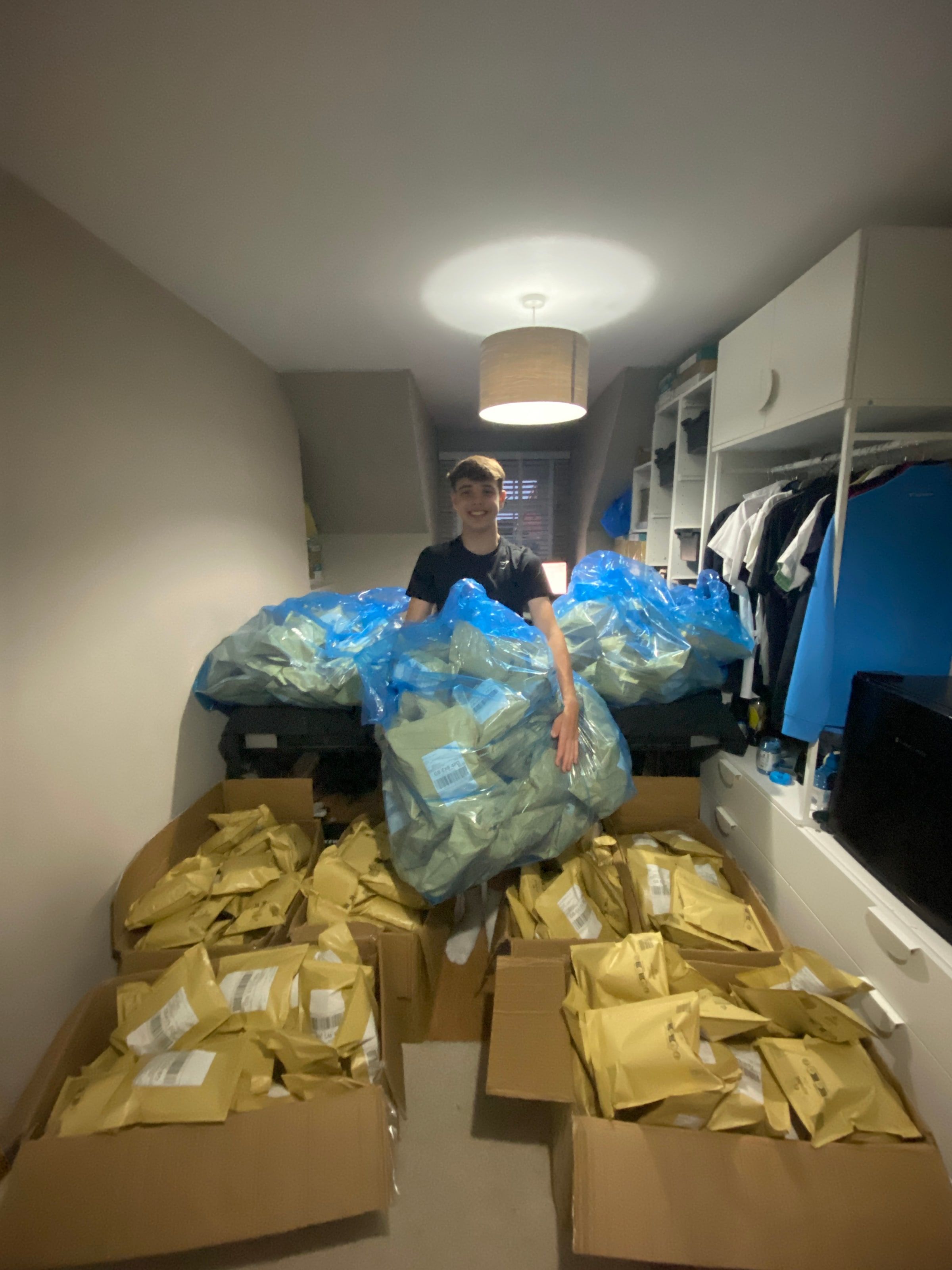
It was not one spike but constant pressure, week after week. The best week that year was two consecutive ten thousand pound days. When the weather cooled he found a different audience and did it again: fifteen hundred orders, sold out, another month waiting on a restock.
Two things went badly wrong that year. He tried pre-orders on TikTok Shop at about four pounds a sale in ads, and took over three thousand orders in three weeks, which solved the cash flow problem he had carried from the beginning.
Then the back end timed out over a customs delay and cancelled every one. Five figures gone in a day, and a shop full of bad reviews.
And he bought two thousand towels that arrived crushed. The cases had not been sealed, so the cabin pressure on the flight had collapsed every thin plastic bottle.
He ordered the bottles separately, recycled the crushed ones, relabelled the new ones with his friends and put the same towels back in, so almost nothing was thrown away.
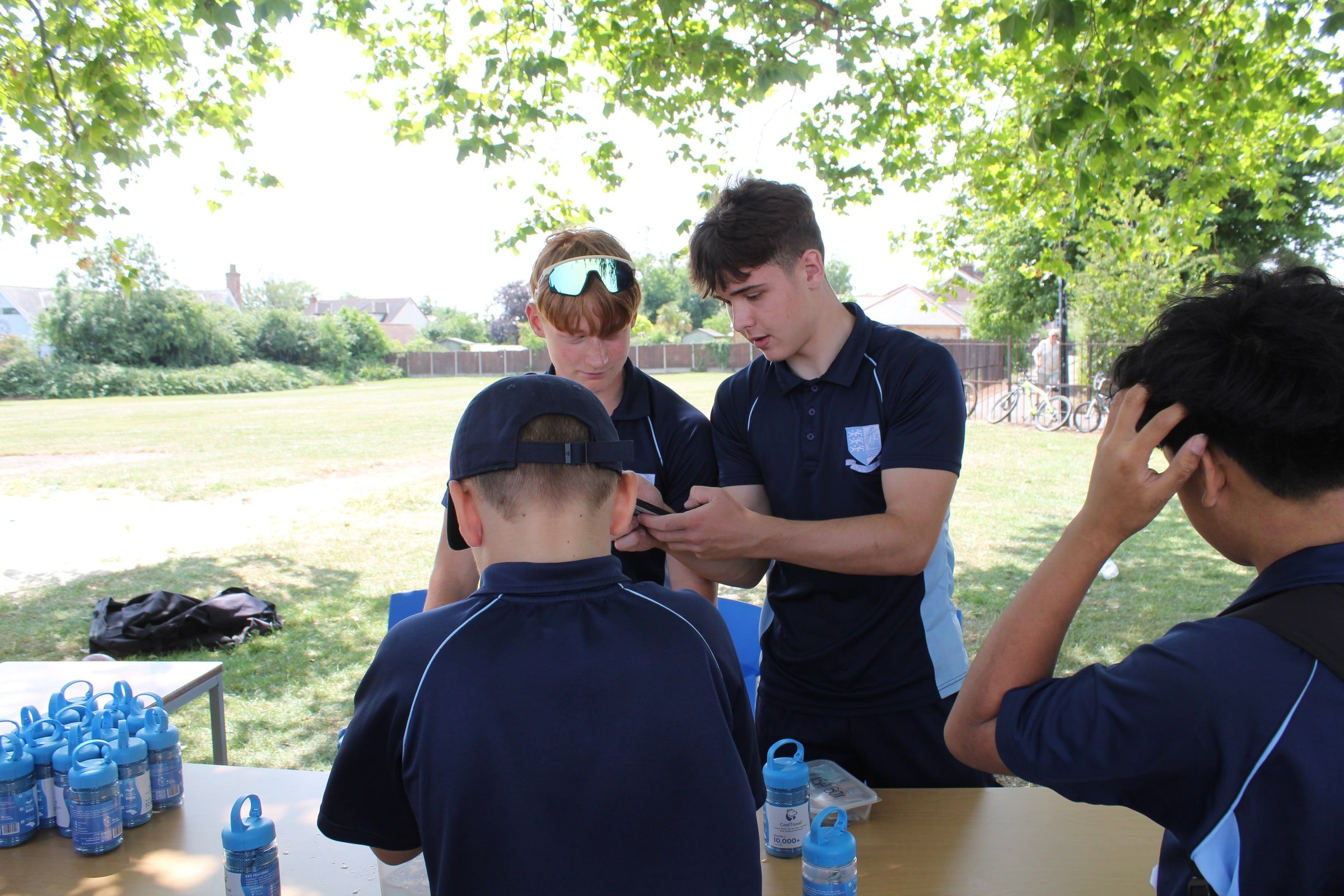
He also sponsored his own school sports day and ran a stand on the field. It did well, and it gave him the idea that has been quietly growing ever since: this does not have to be an online product.
Ninety seconds
Alibaba found him on TikTok and on Chinese news, and asked him to make videos about their event in Las Vegas. He talked them into flying him out for it.
He watched thirty pitches and thought every one deserved the money, and spent the week in rooms full of people worth tens of millions who gave him their time anyway. His summary of Las Vegas: it showed him how small a fish he was.
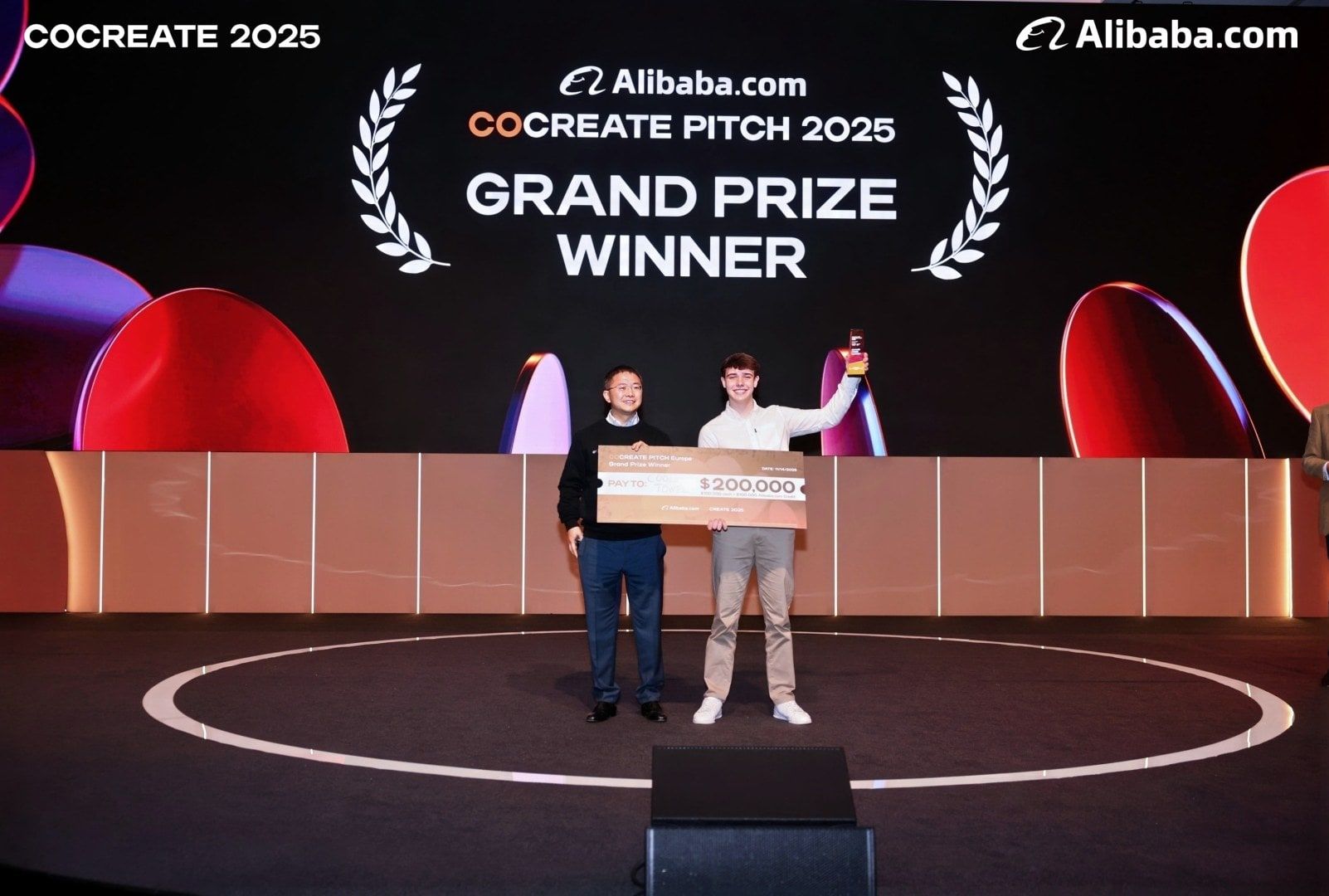
So he asked whether he could pitch at the first European edition in London. After thousands of calls and forms, they let him: ten winners at $20,000 and one grand prize. He practised out loud everywhere, and went to his school teachers for public speaking advice.
The judges were Rio Ferdinand, Sara Davies, Everette Taylor and Alistair Brownlee. The president of Alibaba.com introduced him personally: fifteen years old, made it in his bedroom because he could not find one that worked, and, he said, just getting started.
He did not describe the towel. He handed the judges one each, soaked his, wrung it out, snapped it and put it round his neck.
Then the numbers, standing up: units sold, reviews, the trademark, the views, the affiliate creators, and who else overheats besides sportspeople. Outdoor workers, women going through the menopause, pets.
Sara Davies said it was a great pitch. Rio Ferdinand asked whether it was B2C or B2B, and then said:
“Harrison, I love this. I'm in. Just so you know I'm well in.”
One of the judges asked him how his grades were, as a joke. He said A star in business.
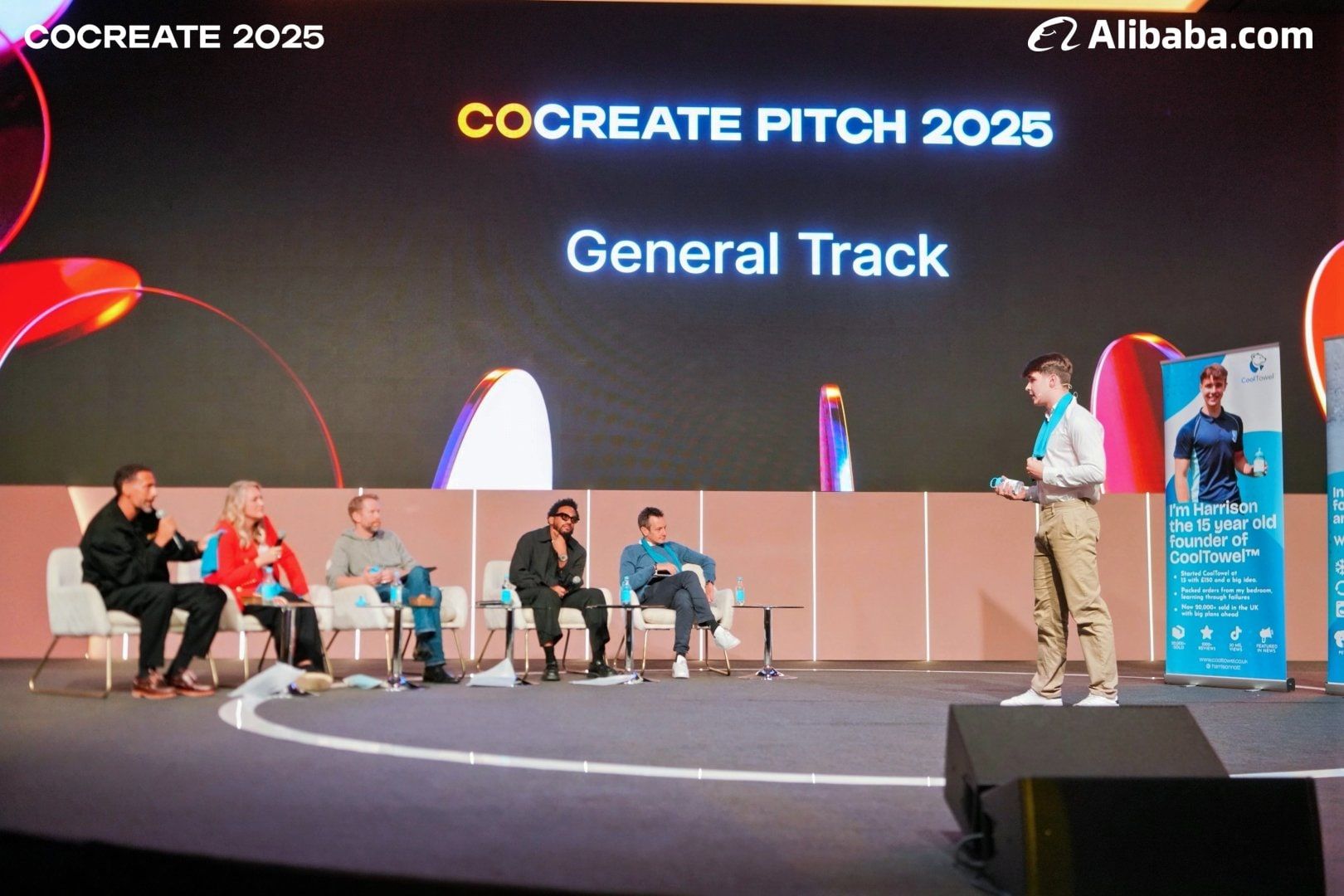
They read the ten smaller prizes and his name was not on the list. He had decided he had had a good week regardless. Then they announced the grand prize as a fifteen year old from England, and he had to walk back out.
$200,000, paid as $100,000 in cash and $100,000 in Alibaba credit, plus a trophy and a mountain bike. The chief executive gave him five words of advice on stage: use the money wisely.
“I didn't just win $200,000 today. I won a million dollars. Because if you include all the contacts I've made, all the media press, everything combined, it has been unfathomably good.”
Harrison, in his own words
It also ended the cash flow problem that had constrained everything since the first fifty units: three weeks for stock, a week to ship, two weeks to be paid. Every viral video had meant selling out and then waiting.
Building the machine
In twelve months he sat ten GCSEs and left school, signed Rio Ferdinand, built a warehouse, rebuilt the website, hired past twenty people, sold more in five days than in some entire years, and then could not trade for two and a half months. Best year and worst year at once.
It started with five months of things nobody makes a video about. VAT registration, EORI, IOSS, a US merchant identification number he had not heard of until a shipment was held up asking for one. Company structure, trademark certificates, barcodes, a third party logistics provider.
Nine months of chasing Rio
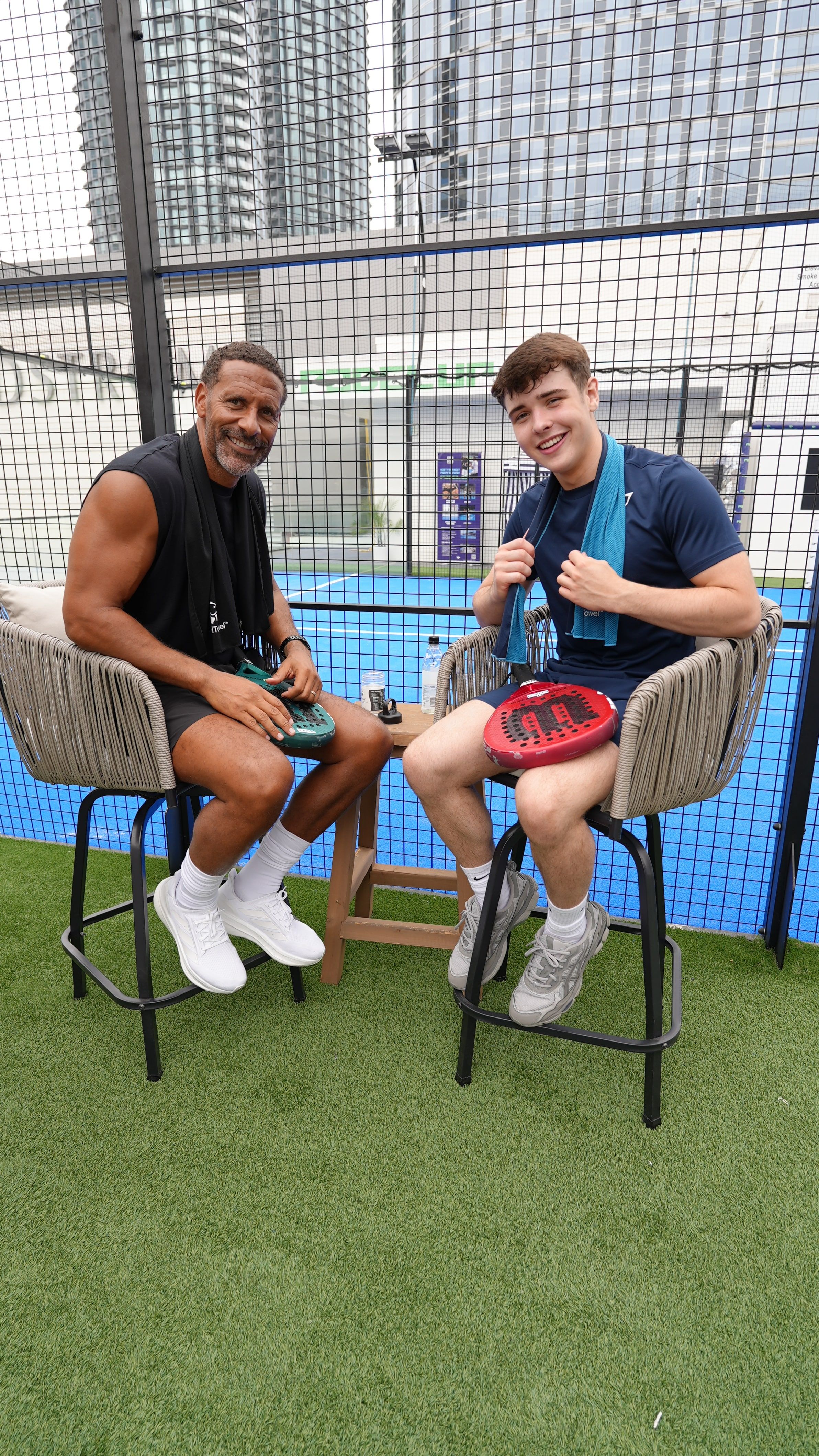
On stage Rio said he was in. It took nine months to become real and almost all of it was Harrison chasing. A message the night of the win called him a young man with the clarity and confidence of a seasoned pro. Five days later, at three in the morning: how do I get involved.
Then in November, product wanted in a hurry for the F1 in Qatar and the World Cup draw in Washington. The courier could not make the deadline, so he and his dad drove to London that night and handed them over themselves.
Then it went quiet. December, January, most of February, message after message with no reply. The advice from two separate people was identical: keep going until they either say yes or tell you to go away.
They met in March at a podcast studio in London Bridge. Rio wrote afterwards: “Start of the journey.” The deal took another two months.
An investor's name on a deck is worth nothing. What is worth something is the phone call they make for you.
What that has opened so far: FIFA came back with five possible routes after product went to Zurich. The FA put him on to their technical director and agreed a trial with the under 21s. Qatar Airways asked about cabin and staff supply.
And the one he liked instantly: school uniform shops across the UAE, a million and a half children a year, sold as Rio put it for the kids by a kid.
The World Cup was in the three markets he sells in, so boxes went to national team hotels: the USA squad, Portugal, Morocco, Germany, and all twenty seven of Argentina in one consignment. Messi got a CoolTowel. Every box had a card in it with a way to get in touch.
Nothing has come of it yet. That is worth writing down, because the version of this where a footballer posts about it is the version that would be on this page if it had happened.
A team, and a building to put it in
This is the year it stopped being one person in a bedroom. over twenty people now: video editors, designers, analysts, media buyers, logistics coordinators, fulfilment staff, advisers.
The most important one was not a hire. A board member came in in January, split his own involvement into three clearly defined roles, and brought corporate governance to a company that had been run out of a bedroom. His brother is the lawyer chasing the counterfeiters.
Underneath that sits a bench of freelancers who do more of the work than anyone realises. One graphic designer has quietly produced nearly every physical thing the brand touches. He invoices in sums like fifty dollars, and apologises for chasing them.
He interviewed hundreds of people to get there, and what he learned is worth more than the headcount. Almost everyone sent a polished, generic, obviously automated pitch. One sent a proper audit, found a problem nobody had asked about and argued with the plan. That is the one he took.
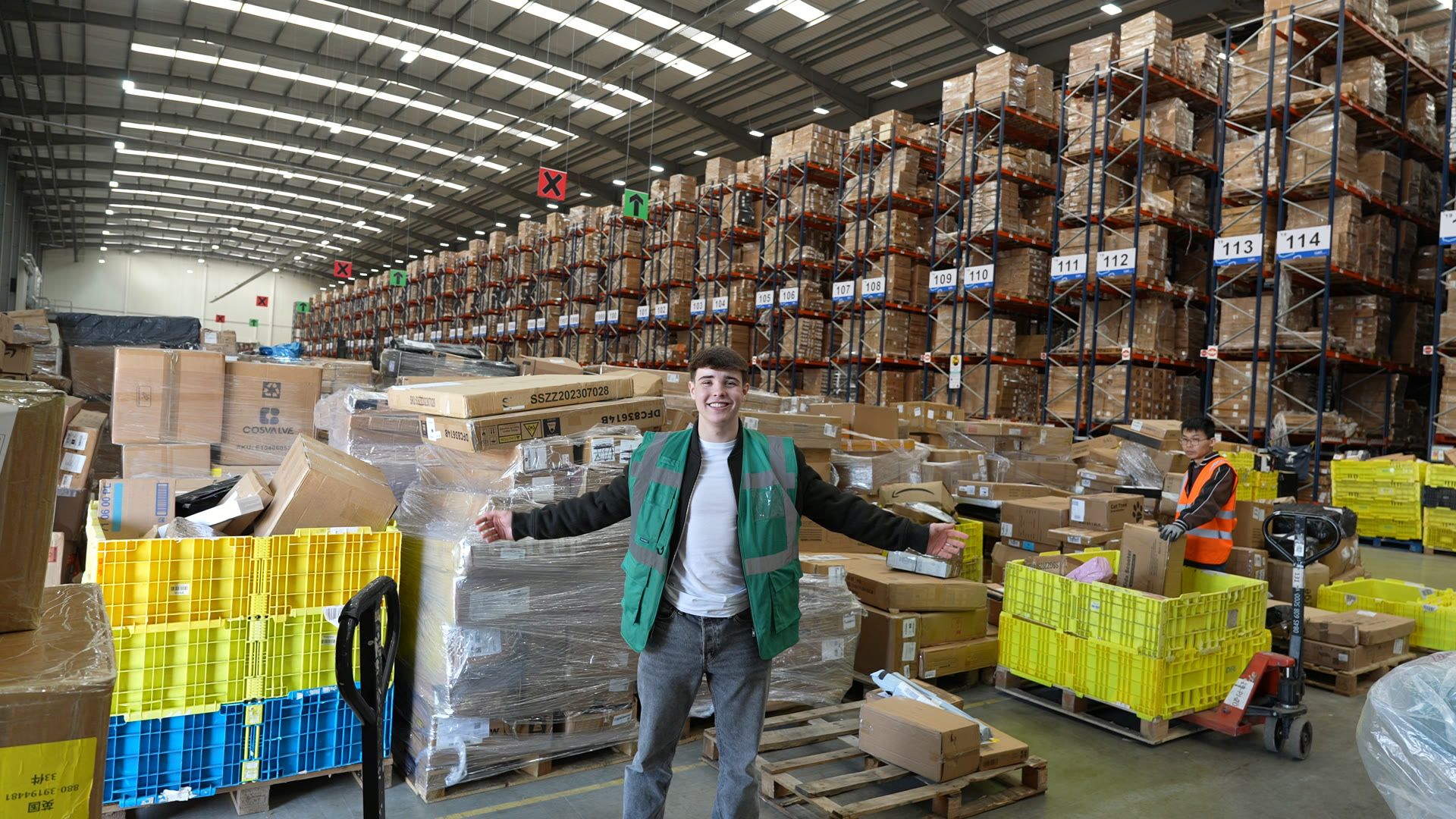
Then the warehouse. He built the case before spending anything, with a deck covering time, money and content. Floor plan, packing benches for ten, ten tablets, an auto peel label printer, six label machines shipped in from China.
And because nothing off the shelf did what he wanted, he wrote the software it runs on himself: logins per employee, live accuracy tracking, end of day reports on units packed and wages owed, and a barcode scanner wired into Shopify.
He also got told his numbers case was weaker than his deck claimed, and agrees it was. The argument that actually held was that this brand was built on a teenager packing orders, and a warehouse is a studio that pays rent.
Ten GCSEs, in the middle of it
He sat ten subjects in May and June with all of the above running, on a part time timetable his school arranged for him, having done almost no revision. The results came on 20 August: 80% grade 6s, a Distinction** in IT at 188/200, and an A in business.
He has since left to do this full time. It is the part of the story most likely to be quoted badly, so it is worth being exact about it.
He is not telling anyone to leave school. He liked school, his teachers helped him get on that stage, and leaving cost him things he is still aware of. It was right for his situation and that is the whole of the claim.
The honest part he volunteers without being asked: his responsiveness to his team dropped through exam season and they noticed. You cannot run a company and sit ten GCSEs without something slipping, and he chose what slipped.
The summer it
nearly went
June: the week it worked
The best week of his life and the worst summer of his life started on the same day.
Late June, the UK had a severe heatwave and CoolTowel went vertical. 15,000 orders inside twenty four hours at the peak. Over £300,000 in five days. June finished around £445,000, with ninety six per cent of it in the last six days and one day close to £98,000.
Nearly 47,000 units in a month, and over 200 million views over the summer, almost all of it filmed by other people. For about five days it was one of the biggest businesses on TikTok Shop in the UK.
And underneath it the unit economics were on fire. In the middle of the biggest week the company had ever had, he found that a discount, free shipping and paid ads stacked on each other meant every order was losing about two pounds.
So he raised the price during the spike, and killed the shop wide free shipping promotion himself: the single promotion with the largest sales attribution on the account.
“Raising your price during your best ever week feels insane. Selling at a loss during your best ever week is worse.”
Harrison, in his own words
July: the week it broke
Then he found out what those five days had cost. Under the load, the sync between TikTok Shop and Shopify silently fell over, and nobody noticed. He found it weeks later doing reconciliation at midnight, because a colleague thought there were duplicate orders.
There were seven duplicates. There were also over 6,000 TikTok orders with no record anywhere in Shopify, more than four thousand of them already shipped, worth about £61,000, with eighty four per cent of them inside the spike.
And from there it went down the line.
- Around two thousand orders were given ghost tracking numbers to hold off cancellations. It failed, and then it made things worse.
- Around seven hundred cancellation requests auto approved, because nobody answered them.
- £5,910 of violation penalties on 394 flagged orders. He appealed and lost.
- Refunds auto approving on used towels and empty parcels.
- One colour oversold to minus 195, with out of stock protection switched on, which is supposed to be impossible.
- 1,198 orders with as many as four different Royal Mail tracking numbers each, because the manifest had been uploaded over and over and every pass made fresh labels.
- Thirty Northern Ireland orders sat undispatched over customs codes.
- Stock hit actual zero on several colours, with thousands of orders queued behind it.
- The logistics provider processed 8,200 orders in one day and over 12,000 the next. It was still not enough.
- A typhoon in China held up a thirty thousand unit shipment.
- He exported order lists at three in the morning so somebody could pull labels off a phone hotspot, because their home wifi would not carry the file.
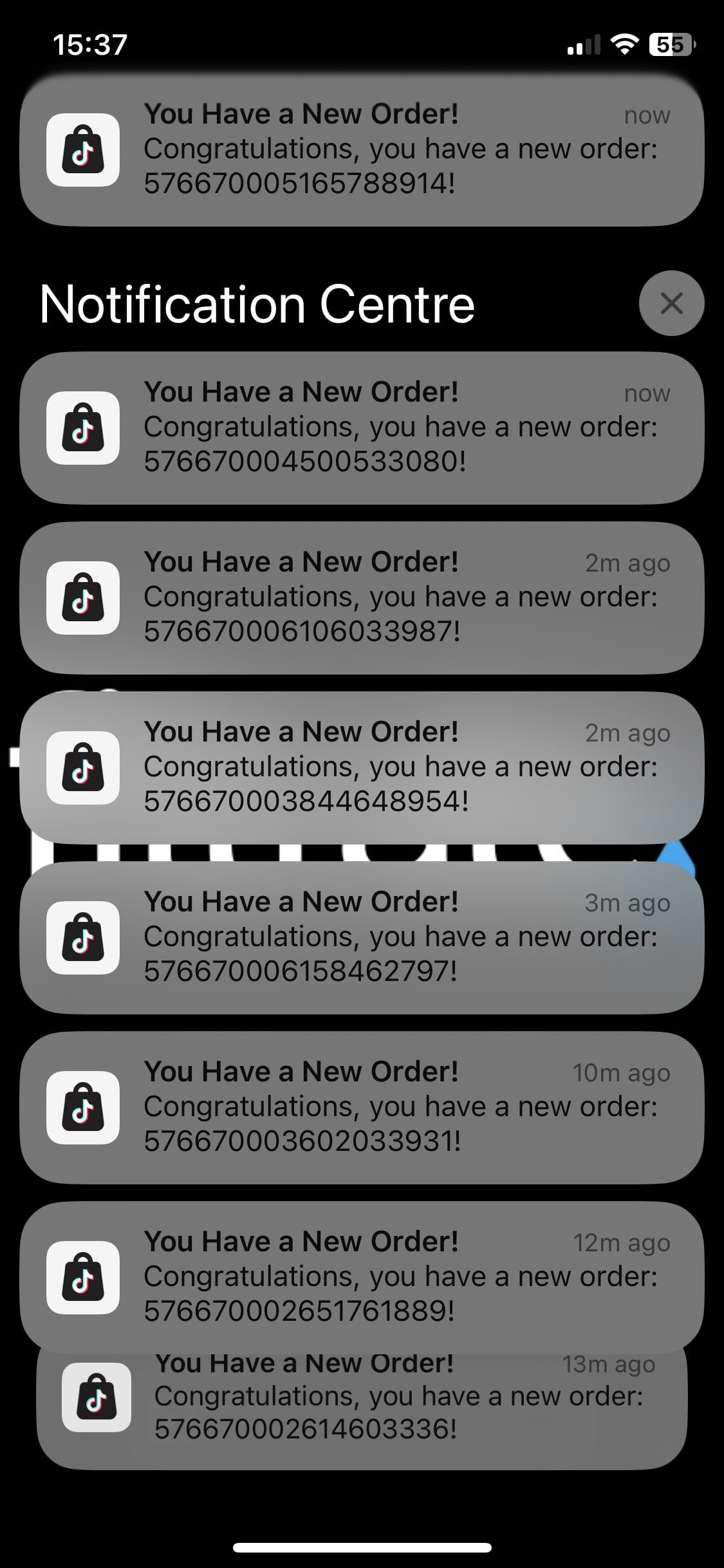
Then the restrictions: a cap of 360 orders a day, fourteen day dispatch on every listing, ads paused. It stayed that way from the middle of June through July and August: two and a half months of the only season this business has.
Around £100,000 went directly in penalties, refunds and lost stock, and roughly half a million pounds of sales turned into a six figure loss. The real number is larger: several more heatwaves in July and August went by with a full warehouse and the shop shut.
Without the $200,000 win, this would have killed the company. Not damaged it. Killed it. There was a stretch where bankruptcy was a live possibility rather than a figure of speech, and he was sixteen, not eating, not sleeping and not going outside.
Two years earlier he lost £500 to a TikTok Shop technicality and thought it was the end of the world. This time he lost two hundred times that to a bigger version of exactly the same lesson.
What it changed: he took the operation back in house, ended the agency arrangement that had been running the shop through exam season, and got a real account manager, which came from messaging a person directly rather than working a system.
September: Los Angeles, again
Ten months after the O2 he flew back to Los Angeles for the American edition, this time as the returning grand prize winner: a fifteen minute keynote, a fireside chat with Rohit Kumar of New Origins, and a main stage panel with Everette Taylor, the chief executive of Kickstarter. He competed in none of it.
The talk is built on a structure he calls The Two Versions. Open with the press release highlight reel and take the applause. Then say now let me ruin it, and spend the rest on what the press release left out.
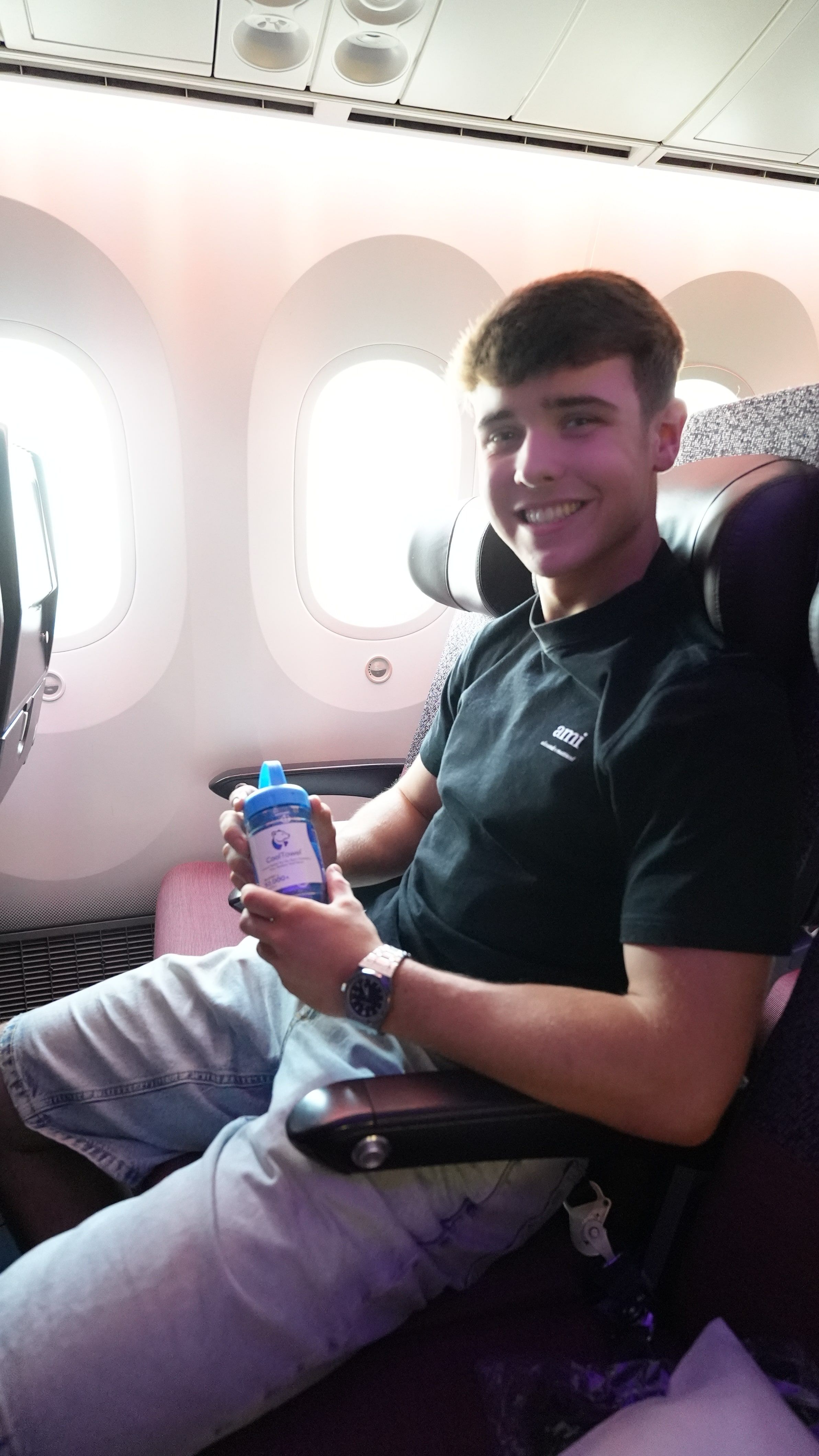
The other half of that trip was his own doing. He had messaged James Corden and got nowhere, so he went to Los Angeles and put a towel in his hands in person.
Chicharito tried one, then found out it was made by a sixteen year old on his grandmother's sewing machine. In the same few days he got one to Clarence Seedorf and played padel with Peter Crouch.
Nobody arranged any of it for him, and that is the entire method: message the person, and when that does not work, go to where they are.
Where it stands
The restrictions mostly lifted once he had a real account manager. The order cap is gone and dispatch is back down to a day, though some violations are still on the account and the ads came back on just as the weather turned.
The United States is the biggest thing on his desk: stock in New Jersey, company incorporated, not live yet. Mexico is delayed with stock already in country, because keeping the company alive outranked opening a new market.
And the quiet one is business to business, which he did not plan and which keeps growing: Premier League club samples out, a route into film production, and interest from the care sector.
That last one includes neurodiverse people who find the cold calming, which is the use he never designed for and cares most about.
The Cool Company
The structural problem with a cooling towel is that somebody can buy one and not need another for years, and the business lives or dies by a weather forecast. The answer he worked out this year has three parts.
The towel stays the hero product. Around it goes a range that belongs together rather than a shelf of badged imports: headbands, sweatbands, cap linings, blankets, pet vests, snoods.
Then the part he is most excited about, because people use it up: pods you drop into the bottle to make the water colder, or smell of citrus. The towel is the razor and the pods are the blades.
The name works because cool means two things at once: actually cold, and something people want to be part of. The brands he wants to build like are the ones where the founder is inseparable from the company.
And a model where the more it sells the more it gives, built in rather than bolted on: heat relief for people who were never going to buy one. None of that has run properly yet, and it is the reason he gives for any of this mattering.
“I don't want to build a cooling towel company. I want CoolTowel to be the product that started The Cool Company.”
Harrison, in his own words
Three years in, he has never taken a salary or a dividend. Everything it makes goes back into it.

Written about
elsewhere
Everything above is his own account of it. This is everybody else's, and it is five stories rather than eighteen.
Two of these runs are the same news agency copy sold to several papers at once, and the November 2025 run is trade press working from one press release. The ones that are somebody's own reporting are the two Essex pieces and the last one.
- Essex County News Maldon teen's business to go global with Rio Ferdinand August 2026
Ben Shahrabi. The most recent and the most detailed: Rio Ferdinand backing it, the Los Angeles trip, and a team of twenty.
- SWNS Teen, 16, wins £150k prize for towel that cools instantly 10 April 2026
The agency piece. SWNS sells its copy on, so most of the 2026 coverage traces back here.
- The Valley Vanguard Boy wins $200,000 prize for towel that stays cool for 2 hours 30 March 2026
- Maldon and Burnham Standard Maldon teen seeing huge success with sports towel business 23 March 2026
His own town's paper. It is the one that mentions the part time school timetable.
- Echo News Essex teen seeing huge success with sports towel business 23 March 2026
- Good News Network Boy Selling Towel That Stays Cool for 2 Hours Wins $200,000 in Prize Money 21 March 2026
- Essex Live Essex boy, 16, who started £100k business from his bedroom wins competition 20 March 2026
Mel King and Jonathan Coles. The first of the 2026 run, and the one his own county read.
- SME Web 15-year-old UK entrepreneur wins $200,000 prize in pitching competition 18 November 2025
Dan Martin. The only one of the prize write-ups that breaks the $200,000 down as $100k cash and $100k in Alibaba credit.
- Startups Magazine 15-year-old grand winner of Alibaba.com's CoCreate Pitch 18 November 2025
- Gazette, Colchester Essex teen won $200K in competition with CoolTowel business November 2025
The only one of the prize write-ups with an interview in it rather than the press release.
- Retail Times Fifteen-year-old Harrison Nott named as Grand Winner of Alibaba.com's CoCreate Pitch and awarded $200,000 prize 17 November 2025
- Business Matters 15-year-old Harrison Nott named Grand Winner of Alibaba.com's CoCreate Pitch, taking home $200,000 prize 17 November 2025
- ChannelX 15-year-old snags $200,000 Alibaba.com's CoCreate Pitch prize 17 November 2025
- Chelmsford City News Essex teenager hoping to 'scale past £100k revenue' 28 July 2025
Not the wire. A Newsquest reporter went and did it properly, and it is the only piece with his dad in it. The same copy then ran across their other Essex titles, which is why a few of the headlines in this list look so alike.
- MyLondon Savvy boy, 15, sets up own business from his bedroom and now makes £15K a day 20 July 2025
Faye Mayern again, a week after the first run of the same wire story.
- Daily Record Teenage boy set to make £100k after setting up business from bedroom 15 July 2025
- Manchester Evening News Boy, 15, set to make £100k in a year after setting up business from his bedroom 15 July 2025
- The Sun I'll make £100k this year aged just 15 after starting my side-hustle out of my bedroom… I haven't even left school yet 13 July 2025
Freya Parsons, off the SWNS wire. The same story ran that week in the Daily Record, the Manchester Evening News, the Stoke Sentinel, Surrey Live, Yahoo News UK and MSN.
And two where he does the talking
- Simon Squibb How a Teen Built a £100K Business Before GCSEs 16 September 2025
On his Simon Says podcast, one of five young founders in the episode. The argument is A-levels against going all in.
- The Side Hustle Show 696: This 15-Year Old is Running a $100,000 Business From His Bedroom 11 September 2025
Nick Loper's show. An hour on how the first million views actually happened.
Links go straight to the outlet. Anything that could not be opened and checked is not on this list.
Every figure, dated
Every number he uses publicly, with the month it was accurate. If a number you have been sent about him is not on this list, it did not come from him. The impressive ones age badly, so they carry their date.
| Figure | What it is | True as of |
|---|---|---|
| 100,000+ | units sold lifetime | 2026-08 |
| $200,000 | Alibaba CoCreate grand prize (paid as $100k cash + $100k Alibaba credits) | 2025 |
| 15,000 | CoCreate entries | 2025 |
| 30 | CoCreate finalists | 2025 |
| £445,000 | June 2026 GMV (96% in the final six days) | 2026-06 |
| £98,000 | biggest single day | 2026-06 |
| £300,000 | GMV across the five-day spike | 2026-06 |
| 15,000 | orders inside 24 hours at the peak | 2026-06 |
| 47,000 | units sold in June 2026 | 2026-06 |
| £61,000 | orders found missing from Shopify after the sync failure | 2026-07 |
| 6,000 | TikTok orders with no record anywhere in Shopify | 2026-07 |
| two and a half months | unable to properly trade, mid-June through August 2026 | 2026-08 |
| £14.99 + £1.99 shipping | current price (buyer pays £16.98) | 2026-08 |
| £2.18 | kept per sale at the current cost base | 2026-08 |
| over twenty | people on the team | 2026-08 |
| £500 | lost when every first-night order was cancelled | 2023 |
| 300 | units restocked after losing everything | 2023 |
| £15,000 | biggest day in summer 2024 (~2,000 orders) | 2024 |
| over 200 million | views across platforms over summer 2026 | 2026-08 |
| 857 | TikTok reviews cleaned and imported by hand | 2026 |
| 80% grade 6s, a Distinction** in IT at 188/200, and an A in business | GCSE results | 2026-08-20 |
The two most often misreported: the prize was $200,000, paid as $100,000 cash plus $100,000 in Alibaba credits, not $200,000 in cash. And the £445,000 month made a loss, so it is not profit.
Everything written here comes from two documents Harrison wrote about his own years and the script of his CoCreate keynote. The photographs are all his. Nothing on this site is stock or generated.
That is where it is up to
It is still going, and most of what happens next has not happened yet. The towel all of this is about is one link away. So is he, and he reads it himself.